Ekla Chalo Re
Shreya Ghosal
0:00
0:00
Shreya Ghosal
Jodi tor dak shune keu na ashe tobe ekla cholo re,
Jodi tor dak shune keu na ashe tobe ekla cholo re, Ekla cholo, ekla cholo, ekla cholo, ekla cholo re.
Jodi tor dak shune keu na ashe tobe ekla cholo re,
Translation : If they answer not to your call, then walk alone
Jodi keu kotha na koe, ore ore o obhaga,keu kothana koi
Jodi shobai thake mukh firaee shobai kore bhoe, jodi shobaai thake mukh phiraae shobai kore bhoi— Tobe poran khule
O tui mukh fute tor moner kotha ekla bolo re.
Translation : If they are afraid and cower mutely facing the wall, O thou unlucky one, open your mind and speak out alone.
Jodi shobai fire jae, ore ore o obhaga,shobai phire jai
Jodi gohon pothe jabar kale keu fire na chae, jodi gohon pothe jabar kale keu phire naa chaai—
Tobe pother kata
O tui roktomakha chorontole ekla dolo re.
Translation : If they turn away, and desert you when crossing the wilderness, O thou unlucky one,
trample the thorns under thy tread, and along the blood-lined track and travel alone.
Jodi alo na dhore, ore ore o obhaga, alo na dhore
Jodi jhor-badole adhar rate duar dee ghore—
Tobe bojranole Apon buker pajor jalie nie ekla jolo re.
Translation : If they shut doors and do not hold up the light when the night is troubled with storm, O thou unlucky one, with the thunder flame of pain ignite your own heart, and let it burn alone.
Like all works of art, this week's song is a poem of deception. It is not what it seems. :) It puts up an appearance of being a song of strong resolution - of walking alone - but is indeed a song of deep love for the universe.
The Divine MadmenThe Bauls - a group of mystic minstrels from Bengal - set in motion a movement so subtle yet powerful that territorial boundaries have ceased to matter : geographical (India - Bangladesh), sectarian (Vaishnava Hindus and Sufi Muslims) or definitional (is it a religion or a musical tradition) merge when it comes to the Bauls. A handful of such Bauls across generations have shaped the Bangla culture in such myriad ways that it is indeed one of the masterpieces of oral and intangible heritage of humanity. Tagore articulates the core belief of the Bauls :
Amar praner manush achhé prané Tai heri taye sakol khane
Achhe shé nayōntaray, alōk-dharay, tai na haraye--
Ogo tai dekhi taye jethay sethay Taka-i ami jé dik-pané
The man of my heart dwells inside me. Everywhere I behold, it's Him!
In my every sight, in the sparkle of light. Oh I can never lose Him --
Here, there and everywhere, Wherever I turn, right in front is He!
The Bauls continue to inspire seekers – as one can read in the soulful story of Parvathy Baul’s initiation into the Parampara (tradition)
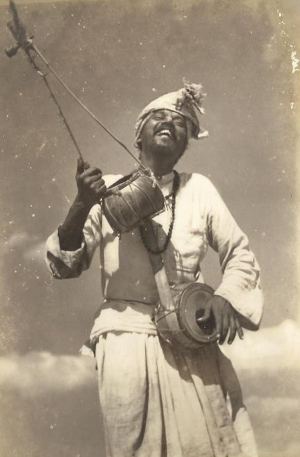 This week’s Maitri Tunes offering, the song Ekla Chalo re was originally composed by Tagore in 1905 and was one of Gandhiji’s favorites. With its theme of walking relentlessly, it has been associated with political rallies and social change movements. In fact, this song was the anthem of the Anti-Partition Movement in Bengal Presidency in 1905. But much like the Bauls who inspired this song, this song is not what it seems J It puts up an appearance of being a song of resolution – of walking alone in face of adversity, but it is indeed a song of love, even as it exhorts us to take up the path that the world – mistakenly, of course - calls nonsense. Tagore is said to have been stirred by the words of a dhap-kirtan written and tuned by his Baul guru Nabani Das Baul that praised Nityananda, a disciple of Chaitanya Mahaprabhu : Harinaam diye jagat matale amar ekla nitaire (The seeker chants the name of the Lord and walks alone). The influence of Nabani is often not written about in Tagore’s writings, but it is said it was because Nabani being a minstrel never wanted to be known to the larger world.
This song has inspired generations who have returned the favor through various renditions of this soulful number : see here, here, here and here
The paths charted by the wayward seem strange. And why not, when the word Baul has its origin in the Sanskrit word Vatula ("mad", from vayu - "air" or "wind") and is used for someone who is possessed or crazy or from Vyakula, which means "restless, agitated." No wonder that Tagore writes,
"That is why, brother, I became a madcap Baul. No master I obey, nor injunctions, canons or custom. Now no men-made distinctions have any hold on me, And I revel only in the gladness of my own welling love. In love there's no separation, but co-mingling always. So I rejoice in song and dance with each and all."
Receive weekly spiritual songs and wisdom in your inbox